
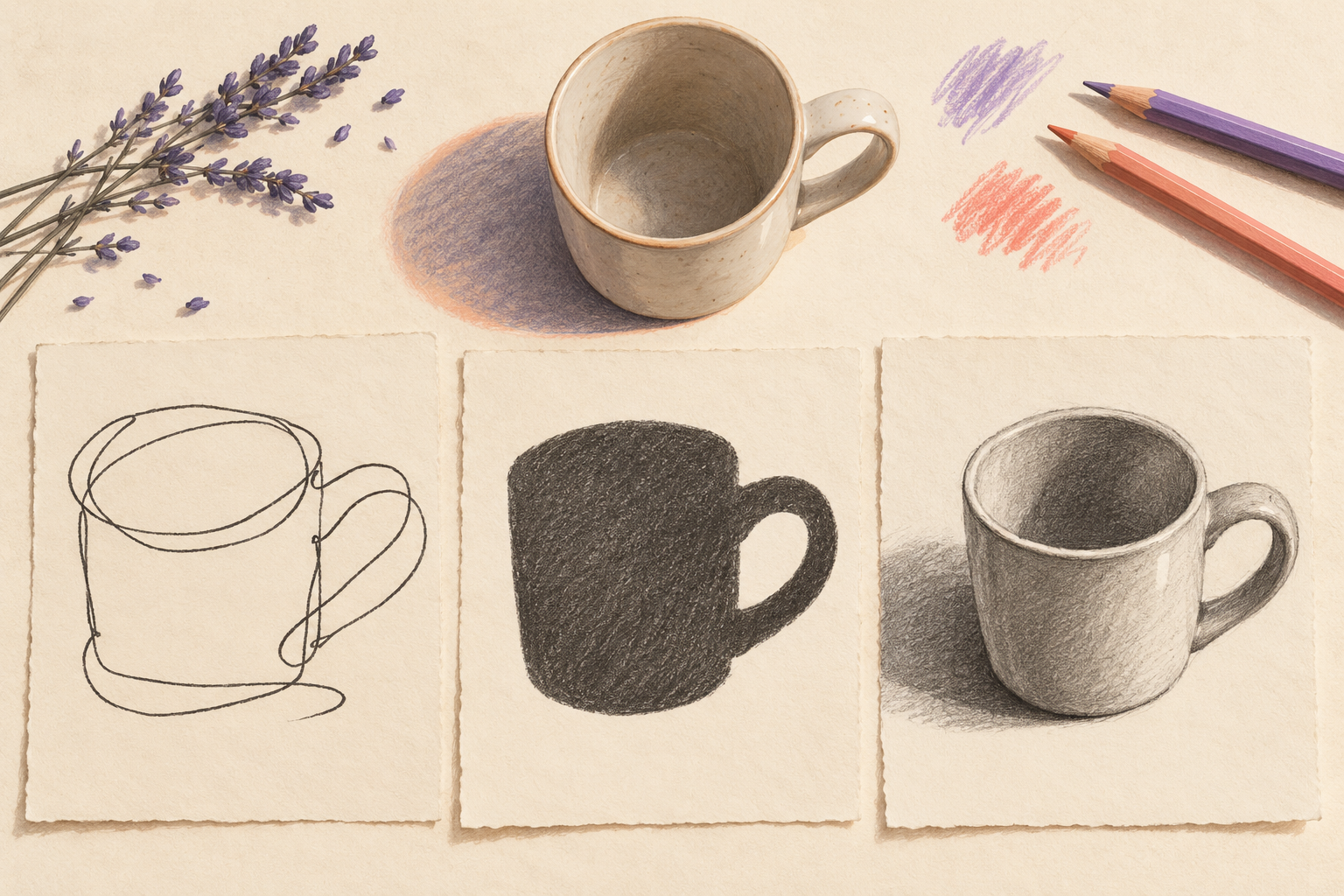
Choose an ordinary object: a mug, a shoe or a small plant. Put it somewhere with a clear view and a little light from one side. You will draw the same object three times, changing the question each time. The aim is to notice more, not to produce a perfect picture.
What you need
Use three sheets of paper, or divide one sheet into three areas. A pencil or pen is enough. Set aside about 15 minutes and choose an object you can comfortably leave in place.
1. Follow the edge — 4 minutes
Start with a loose outline. Let your eye travel slowly around the object while your hand follows. Look back at the object more often than at the paper. Keep the marks light and allow yourself to revise them. Notice the spaces inside a handle or between leaves as well as the outside edge.
2. Find the big shape — 4 minutes
On a fresh area, simplify the object into a silhouette. Ignore decoration and small details. Ask how tall it is compared with its width, and where the shape changes direction. You can fill the silhouette with pencil or leave it as an outline.
3. Look for light and dark — 5 minutes
Make a third study using only three values: the paper for the lightest areas, a middle grey and a darker grey. Squint briefly to simplify the shadows. Look for the largest dark shape before adding small marks. You do not need to blend everything smoothly.
Compare, rather than judge — 2 minutes
Put the studies side by side. Which one helps you see the object most clearly? Which marks surprised you? Choose one thing to try again: a slower line, a simpler shape or a stronger shadow. Date the page so you can return to it later.
Ready to make alongside others? Explore the workshop programme or tell us what you would like to try. For new-session announcements, join LAB Notes on the Workshops page.
Leave a Reply