
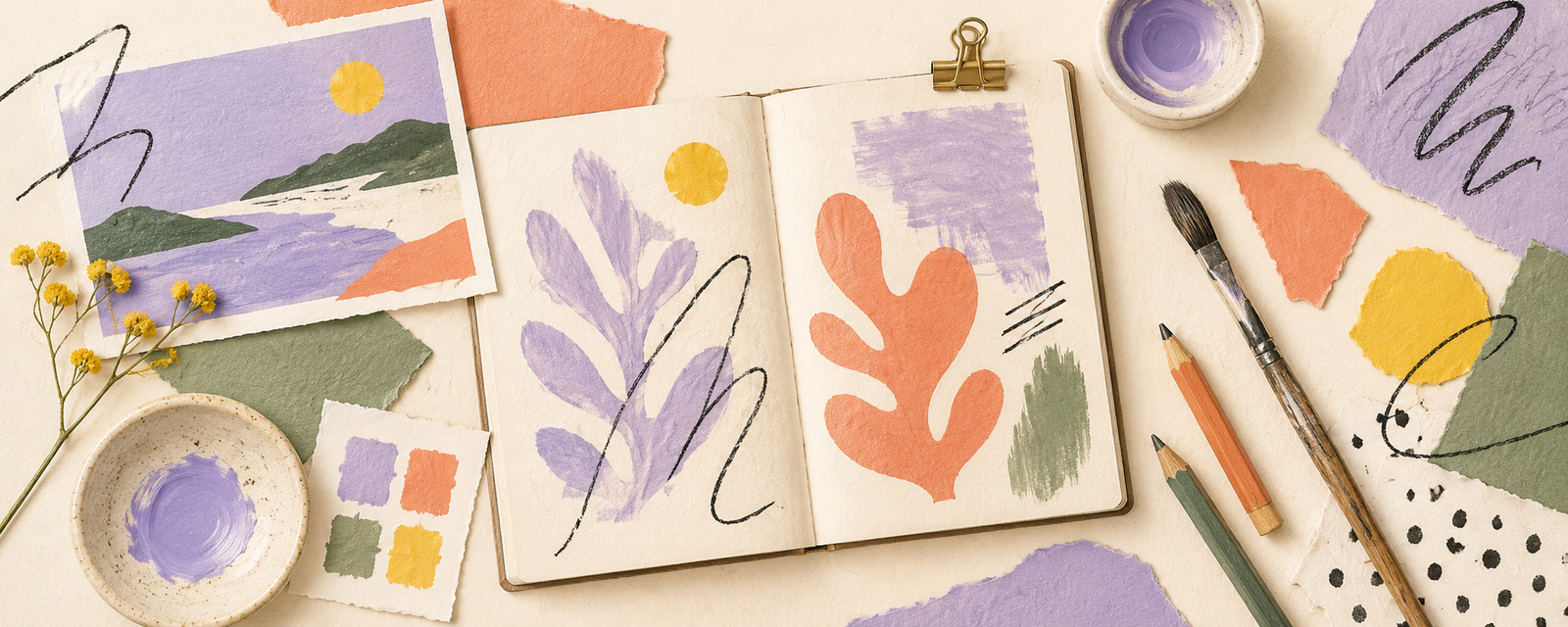
A small test can answer a useful question before a project becomes complicated. Choose materials you already have and investigate one relationship: pencil over paint, a brush mark beside a pen line, or two colours layered on paper. You do not need a new set of supplies to begin.
Choose one question
Keep the question specific. How does this pencil mark change on rough paper? What happens when a second layer goes over a dry first layer? What kind of edge does this brush leave? Change one thing at a time so you can see what caused the difference.
Make room for comparison
Divide a spare sheet into several areas. Repeat a mark in each area, changing the pressure, amount of water or order of layers where appropriate. Follow the materials’ own use and safety instructions, and avoid mixing unfamiliar products without checking their guidance.
Leave yourself a note
Label each test with the materials and the change you made. Keep the test sheet beside the project. A note such as “dry first layer” is more useful later than trying to remember what happened.
Pick a result to use
Choose one test that serves your idea and use it in a small study before moving to a larger piece. Keep the unexpected results too: they may be the beginning of another experiment.
Ready to make alongside others? Explore the workshop programme or tell us what you would like to try. For new-session announcements, join LAB Notes on the Workshops page.
Leave a Reply